
The draft of Kazakhstan’s new Constitution is ready to be submitted to a nationwide referendum. This was announced by members of the Constitutional Reform Commission.
According to Human Rights Commissioner Artur Lastaev, the proposed document establishes a more stable and clear system of guarantees for the protection of citizens’ rights and freedoms. He noted that the draft strengthens legal certainty, expands judicial protection mechanisms, and enshrines a human-centered model of governance as a fundamental principle of the state.
Lastaev emphasized that the draft Constitution takes into account real-life situations faced by citizens and aims to prevent arbitrary decisions that could infringe upon fundamental human rights.
In his view, the document fully meets public demand for justice, security, and respect for human dignity. Considering the extensive work carried out and the broad public discussion, the draft may be submitted to a nationwide referendum and supported as a document reflecting the interests of citizens.
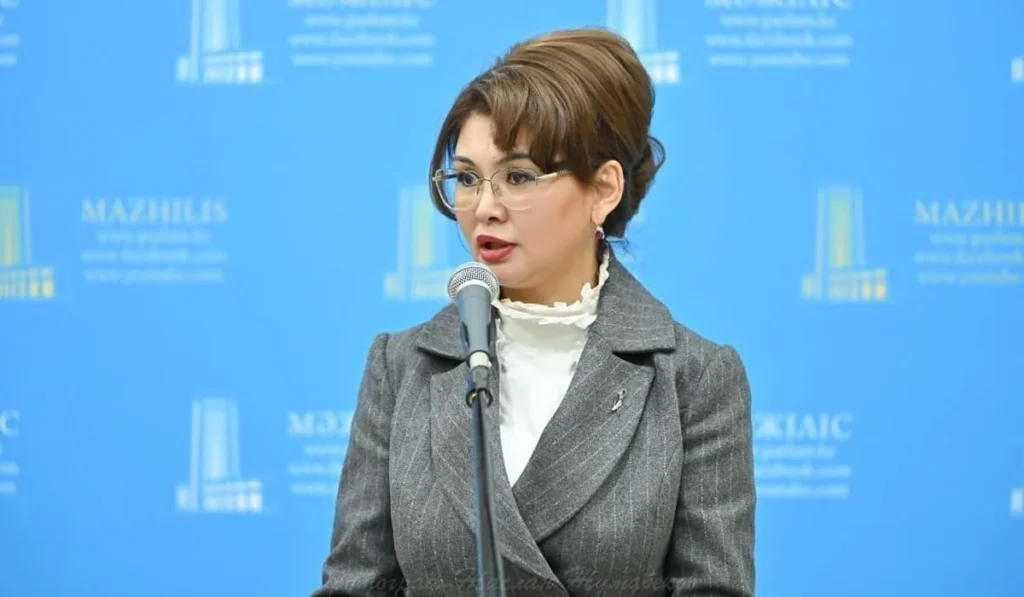
A similar position was expressed by Mazhilis Deputy Snezhanna Imasheva. She stated that the adoption of the proposed norms would ensure legal clarity and predictability in the functioning of state institutions. She also stressed the importance of clearly defining the scope of authority of each state body during the transition period.
According to Imasheva, once the section on final and transitional provisions is fully refined, the Constitution draft can be considered ready for submission to a national referendum.
At the tenth meeting of the Constitutional Commission, political analyst Marat Shibutov noted that work on several articles of the Basic Law is still ongoing. Nevertheless, he emphasized that the current version is the result of joint efforts by experts from various fields with diverse experience and viewpoints, and therefore is ready to be presented for a nationwide vote.
Issues discussed at previous meetings
At the tenth meeting, Mazhilis Deputy Azat Peruashev proposed regulating the return of assets illegally seized from private individuals by corrupt officials.
Deputy Murat Abenov spoke about the need to eliminate the risk of “institutional collapse” in Kazakhstan and suggested revising provisions related to the dissolution of Parliament. He also opposed the growing “cancel culture.”
At the ninth meeting, commission members supported the initiative to закрепить the tenge as the national currency at the constitutional level. Deputy Chair of the Constitutional Court Bakyt Nurmukhanov reported that provisions related to citizenship would be clarified in the new Constitution.
Deputy Prime Minister and Minister of Culture and Information Aida Balaeva explained why the word “free” was removed from articles concerning guaranteed secondary education and healthcare, and clarified how the draft Constitution balances freedom of speech with the protection of honor, dignity, and private life.
State Counselor Erlan Karin explained why Kazakhstan’s Constitution could not simply be copied from other countries and how national characteristics were taken into account. He also stated that a number of mistakes made during the drafting of the current Constitution were addressed in the new project.
The Constitutional Reform Commission was established by presidential decree on January 21, 2026. Its main task is to develop proposals for implementing constitutional reform.
Earlier, the President noted that initially it was planned to amend about 40 articles of the Constitution, but during the process it became clear that significantly more changes were required.
Content of the Draft Constitution
On January 31, the full text of the draft Constitution was published. The document had previously been presented by Deputy Chair of the Constitutional Court Bakyt Nurmukhanov.
The draft consists of a preamble, 11 sections, and 95 articles. According to the Constitutional Court’s official website, the new preamble for the first time proclaims human rights and freedoms as the highest priority of the state. Unity, solidarity, and interethnic and interfaith harmony are defined as the foundations of Kazakhstan’s statehood.
It is also explicitly stated that the sole source of state power and bearer of sovereignty is the people of Kazakhstan.